
Denver Seminary’s Bridge Gallery provides a way to engage the needs of the world through art. Located in the Harold and Virginia Simpson Leadership Building, the gallery provides space for artists to bring new perspectives on the gospel for our Seminary community as well as the community at large. Guests are invited to browse the collections and are invited to participate in unique conversations featuring a variety of artists and their work.
Spring 2025: Health Care Injustice
Presented by The Bridge Gallery partnering with The Gospel Initiative
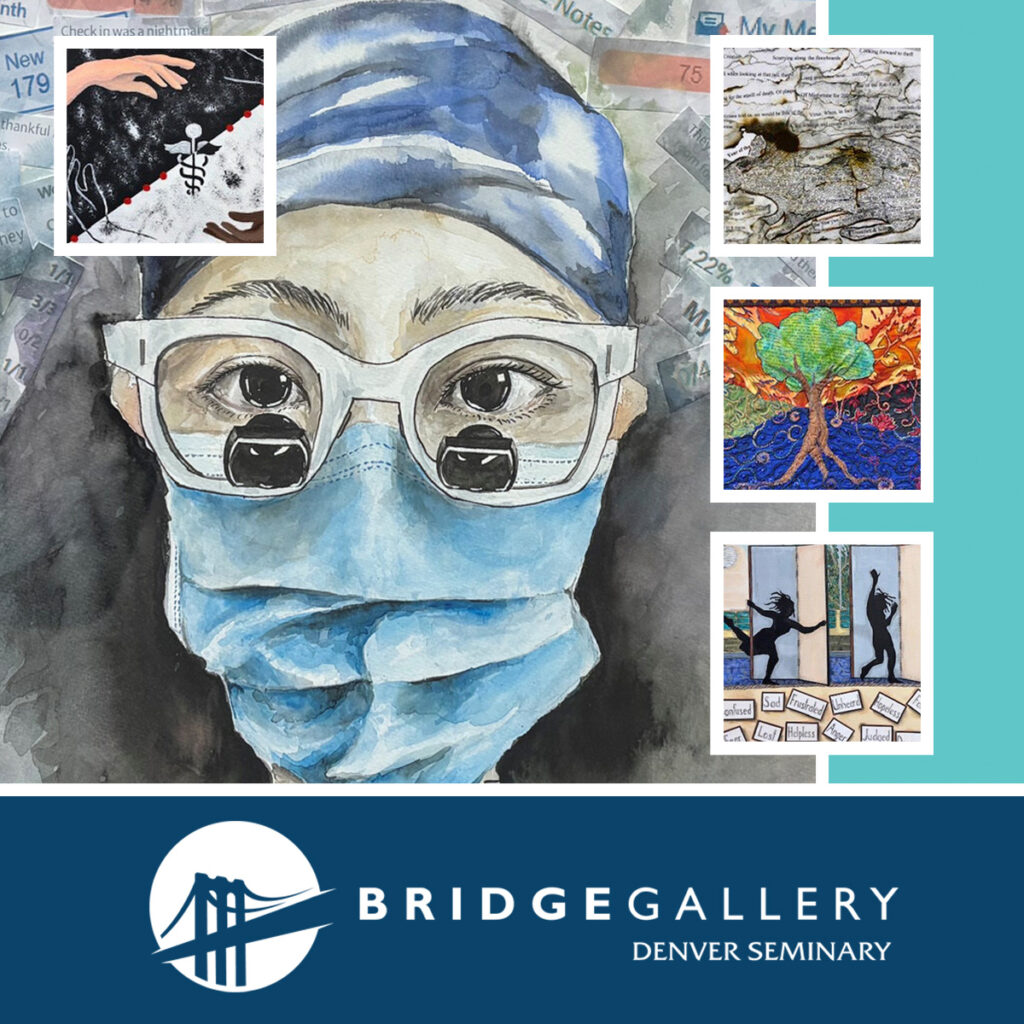
Healthy living in the United States remains deeply unequal, with racial and economic disparities persisting in healthcare. Mental health awareness is growing, yet solutions remain scarce amid a loneliness epidemic. Explore these critical issues at the Bridge Gallery Art Exhibit, presented by The Bridge Gallery and The Gospel Initiative, where visual arts offer a powerful lens into healthcare injustice.
This thought-provoking collection tackles pressing questions, such as the role of Christian witness in healthcare injustice, the vision of a healthy life, and how healthcare professionals can drive change while avoiding burnout. Engage with a diverse array of artists and their compelling works in this immersive, conversation-driven experience.
Exhibit Details
Location
Denver Seminary
Harold & Virginia Simpson Leadership Center
6399 South Santa Fe Drive Littleton, CO 80120
Dates and Times
January 27 through May 12
Gallery Hours: M-F 8:00 am – 4:00 pm
Previous Exhibits
Spring 2022: Jake Weidmann – Certified Master Penman and Artist
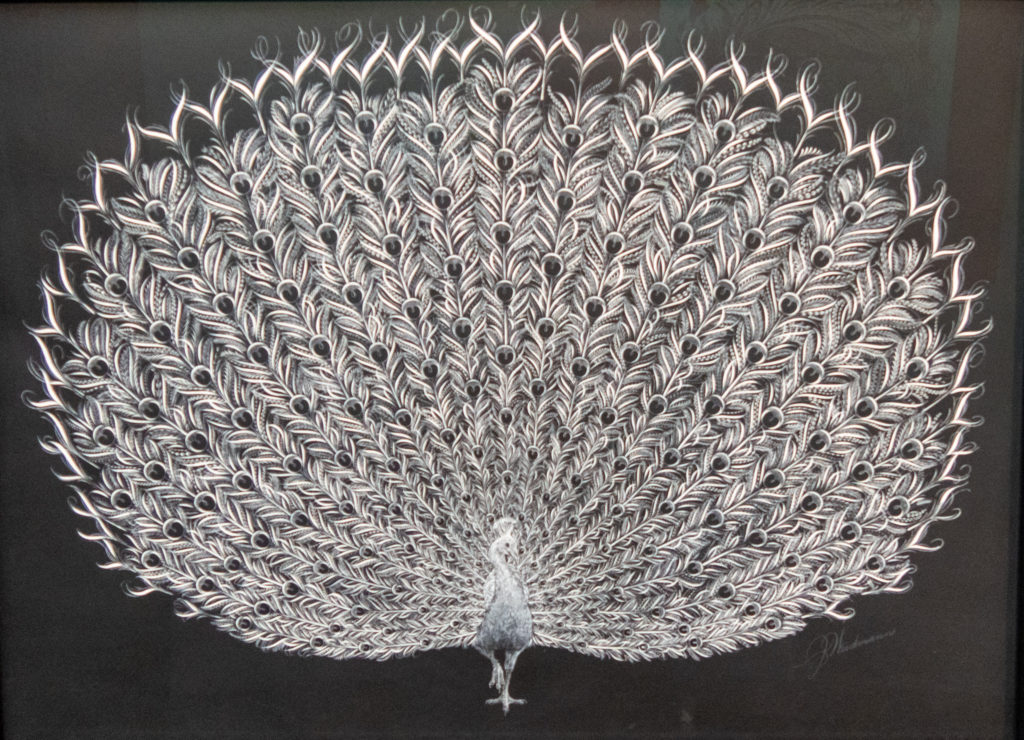
Denver Seminary was proud to host artist and Master Penman, Jake Weidmann. He is one of only nine Master Penmen in the world and the youngest in history. Through his art, Jake desires to identify those common passions, struggles, and truths we share as humans.
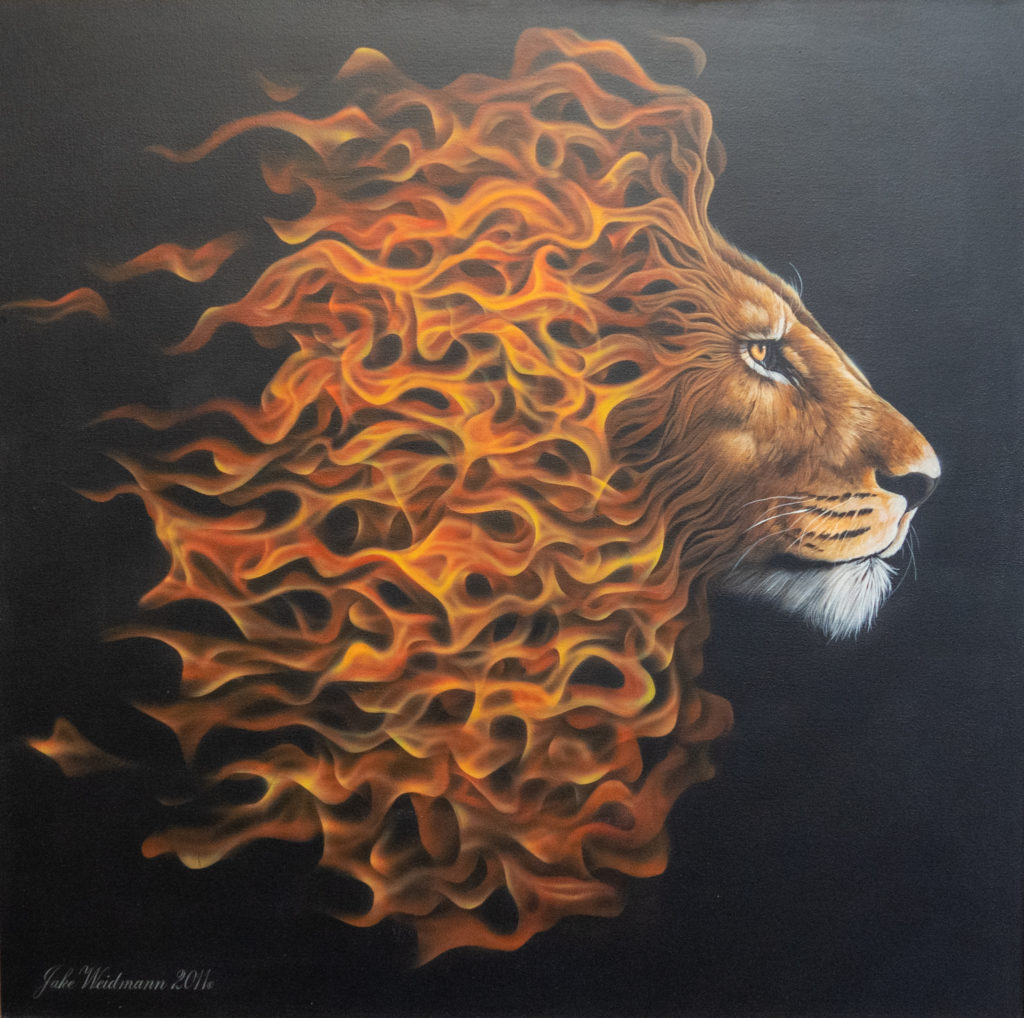
Jake has spoken from the TEDx Mile High stage twice as well as to a private group of animators at Pixar Studios. Weidmann works primarily with private commissioners and has also partnered with clients such as Apple Inc., Crossway, and Biola University, and others. He is dedicated to maintaining the increasingly lost art of penmanship in an age of digital communication, preserving a link to the historied artisans of the past while bringing that beauty into the present and future. He lives in Colorado with his wife, Hannah, and their three children.
Fall 2021: Reflections on the Psalms by Christos Collective
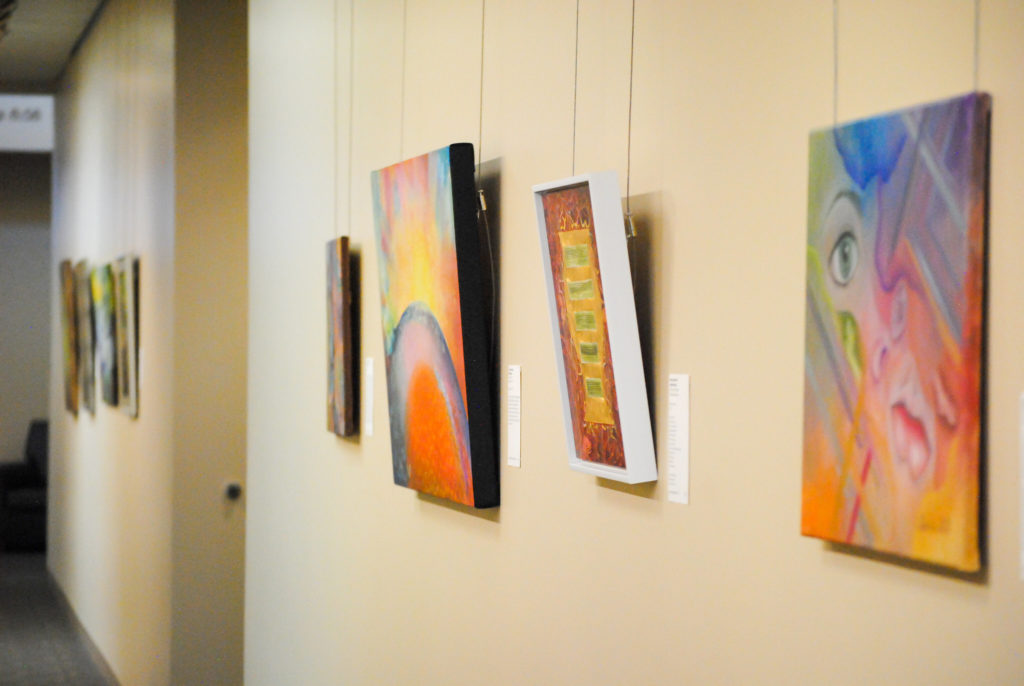
The Psalms are songs that express the entirety of our human emotions; we cry, we laugh, we sing, we lament, we rage, we praise. They allow us to be within our emotions yet always bringing us to our Lord in prayer. Our Lord knows what is in our hearts and minds, He knows our feelings and deepest desires.
The beauty of the Psalms is that through them, we can come before God, being real and vulnerable with Him. Our yearnings are given to the Lord through the Psalms, poetically, honestly, and beautifully. They allow us to come into the throne room and stand before our God knowing that He hears us, loves us, and accepts us as His own. Praise be to His most holy Name!
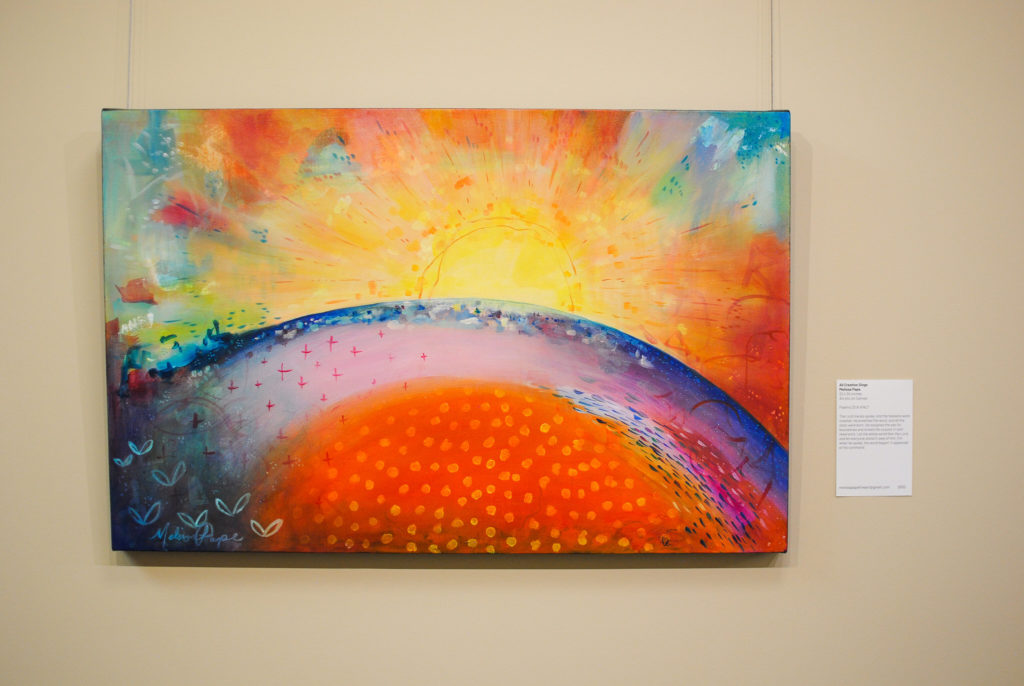
Spring 2020: Brokenhood by Justin Reddick and ADX Supermax Inmates
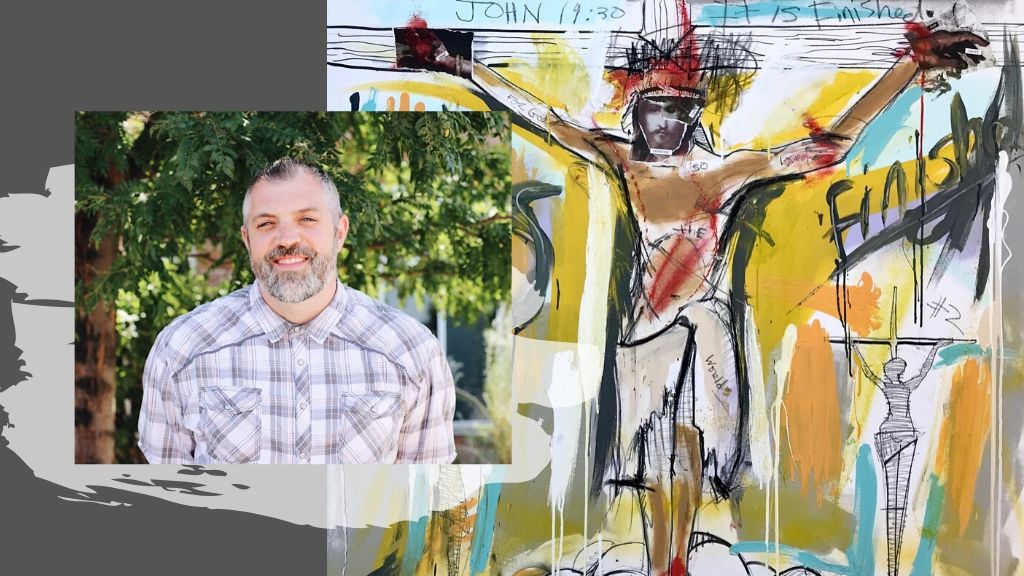
Within a prison environment, inmates have historically gone to great lengths to create artwork as a way to focus on something other than their surroundings and to create a sense of safety for themselves. However, efforts to produce quality and meaningful artwork has almost been entirely inmate-led within most prisons.
Brokenhood showcased the radical struggle that people took together, moving from sorrow to joy through their kinship and their shared love of the arts. It offers a mature body of work that centers on the broken aspects of humanity, personal triumph, and the intense hope that resides between the bars of incarceration.
Blacks in Theology 2020
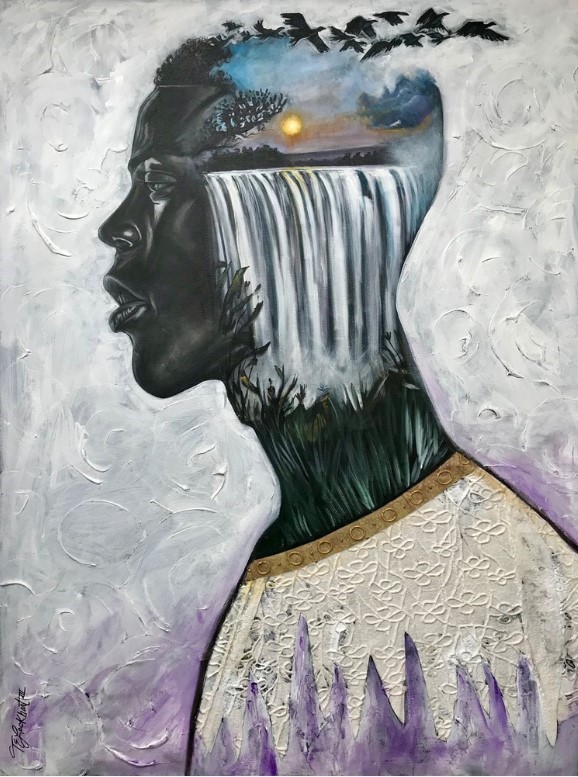
Denver Seminary was honored to host artwork by Thomas Lockhart, a talented artist who is shaping culture through his work. He is a dynamic and multi-faceted artist who creates in a variety of styles and genres, while utilizing various mediums including oil, acrylic, pencil, and mixed-media.
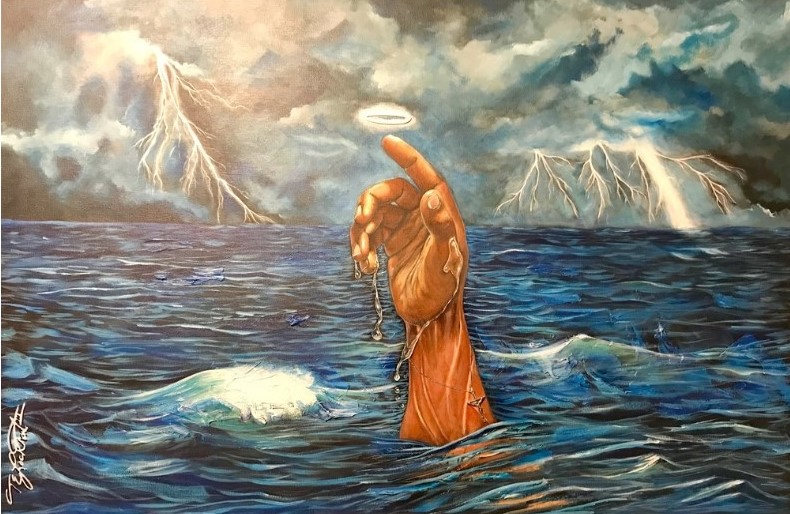
This gallery exhibit coincided with Black History Month and the Seminary’s Blacks in Theology week.
Spring 2018: The Cross by Christos Collective
What Jesus did for us on the cross is the single most important event in human history. It is the foundation of our faith. The symbol of the cross has become the most recognizable and disturbing symbol on earth. With this exhibition, the goal of Christos Collective is to behold and to help others to fix their eyes upon the magnitiude of Christ’s crucifixion and resurrection. May our hearts not follow anything that would distract from the simplicity and power of Christ’s cross.
Fall 2018: Jake Weidmann
Jake Weidmann is a professional artist and certified Master Penman in Denver, CO. The youngest in history among twelve existing Masters today, Weidmann received his Master Penman certificate through the International Association of Master Penman, Engrossers and Teachers of Handwriting (IAMPETH) in July of 2011. He works across numerous mediums in art and calligraphy and is most well known for his use of traditional calligraphic flourishing and hand lettering in the context of his fine art. For more information, please see here.
Spring 2017: Inside the Diving Bell
Anne Emmons, Tim Timmerman, and Kiki McGrath
Inside the Diving Bell is a series of collaborative paintings by Anne Emmons, Tim Timmerman and Kiki McGrath. The title alludes to an image poet Christian Wiman used to describe the creative process, a metaphor for protection while descending to unknown depths to form a work of art. Our practice required a spiritual descent as well, with faith in each other as artists and fellow sojourners seeking God.